 English
 Español
  Português
  русский
  Français
  日本語
日本語  Deutsch
  tiếng Việt
  Italiano
  Nederlands
  ภาษาไทย
  Polski
  한국어
한국어  Svenska
  magyar
  Malay
Malay  বাংলা ভাষার
  Dansk
Dansk  Suomi
Suomi  हिन्दी
  Pilipino
  Türkçe
  Gaeilge
  العربية
  Indonesia
  Norsk
Norsk  تمل
تمل  český
český  ελληνικά
  український
  Javanese
  فارسی
فارسی  தமிழ்
தமிழ்  తెలుగు
  नेपाली
  Burmese
  български
  ລາວ
ລາວ  Latine
  Қазақша
  Euskal
  Azərbaycan
  Slovenský jazyk
  Македонски
  Lietuvos
  Eesti Keel
  Română
  Slovenski
  मराठी
मराठी  Srpski језик


How Do H-beam Welding Machines Improve Structural Fabrication Efficiency?
Summary: H-beam welding machines are critical in modern steel structure fabrication, enhancing precision, speed, and safety. This article explores their functionalities, advantages, and how companies provide innovative solutions for manufacturers.
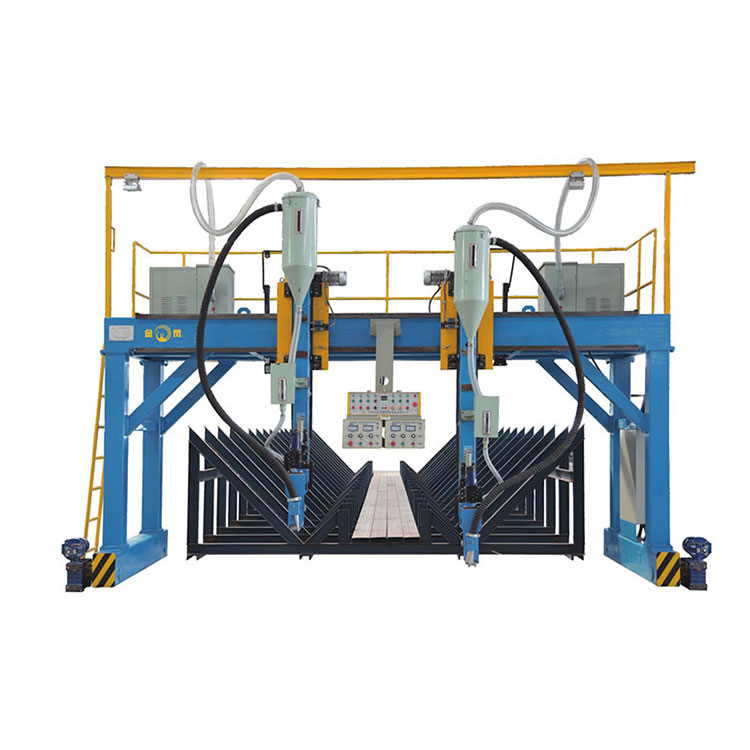
Table of Contents
- Introduction to H-beam Welding Machines
- Key Features and Benefits
- Operation Process Explained
- Common Issues and Troubleshooting
- FAQ
- Conclusion
Introduction to H-beam Welding Machines
In steel structure construction, efficiency and precision are crucial. H-beam welding machines specialize in welding H-shaped steel beams, which are fundamental in building frameworks. These machines automate the welding process, minimizing human error while increasing throughput.
Companies like JINFENG® focus on developing advanced H-beam welding solutions to address industry pain points, including inconsistent weld quality, slow production rates, and operator fatigue. By integrating automation, these machines allow fabricators to meet tight deadlines without compromising safety or structural integrity.
Key Features and Benefits
Modern H-beam welding machines offer several advantages that address common challenges in fabrication:
- Automatic Alignment: Ensures the H-beam is positioned accurately for consistent weld quality.
- Adjustable Welding Parameters: Operators can fine-tune voltage, speed, and current for different steel thicknesses.
- High Efficiency: Reduces welding time significantly compared to manual methods.
- Enhanced Safety: Minimizes direct human contact with high-temperature welding zones.
- Integration with CNC Systems: Allows precise automation and repeatable results for complex projects.
Below is a comparison table highlighting advantages over traditional welding methods:
| Feature | Manual Welding | H-beam Welding Machine |
|---|---|---|
| Speed | Slow | Fast & consistent |
| Precision | Variable | High accuracy |
| Operator Fatigue | High | Minimal |
| Safety | Moderate risk | Enhanced safety |
Operation Process Explained
The operation of an H-beam welding machine typically involves several steps:
Step 1: Beam Loading
The operator loads the H-beam onto the machine bed, where automated clamps secure it in place.
Step 2: Alignment and Calibration
The machine aligns the beam automatically using sensors, adjusting for exact welding points. This ensures even welds along the entire length of the beam.
Step 3: Welding Execution
The welding unit moves along the H-beam, applying heat and filler material precisely. Pre-programmed settings optimize weld penetration and bead formation.
Step 4: Quality Inspection
After welding, automated inspection systems check for defects, ensuring compliance with structural standards.
Step 5: Beam Unloading
The completed H-beam is safely released from clamps, ready for assembly or further processing.
Common Issues and Troubleshooting
Even with advanced machines, operators may encounter issues. Here are common problems and solutions:
- Uneven Weld Bead: Check alignment sensors and recalibrate if necessary.
- Slow Welding Speed: Ensure proper power supply and inspect for mechanical wear.
- Excessive Spatter: Adjust voltage and wire feed settings; ensure proper shielding gas flow.
- Machine Downtime: Follow preventive maintenance schedules provided by JINFENG®.
FAQ
Q1: What types of H-beam welding machines are available?
There are single-sided, double-sided, and fully automated CNC H-beam welding machines, each suited for different production scales.
Q2: Can these machines handle different steel thicknesses?
Yes, modern machines allow adjustable welding parameters to accommodate various beam sizes and thicknesses.
Q3: How much maintenance do H-beam welding machines require?
Regular preventive maintenance is recommended, including inspection of mechanical parts, sensors, and electrical systems.
Q4: Are H-beam welding machines safe for operators?
Yes, these machines are designed with safety enclosures and automation to minimize direct contact with hot surfaces and moving parts.
Conclusion
H-beam welding machines are transforming steel fabrication by increasing efficiency, precision, and safety. Manufacturers like JINFENG® continue to innovate, providing solutions that address common industry challenges. Investing in an advanced H-beam welding machine can lead to higher production rates, consistent weld quality, and reduced labor costs.
For more details about JINFENG® H-beam welding machines, visit our product page and contact us today to discuss how our machines can optimize your fabrication process.
Send Inquiry



X
We use cookies to offer you a better browsing experience, analyze site traffic and personalize content. By using this site, you agree to our use of cookies.
Privacy Policy