 English
 Español
  Português
  русский
  Français
  日本語
日本語  Deutsch
  tiếng Việt
  Italiano
  Nederlands
  ภาษาไทย
  Polski
  한국어
한국어  Svenska
  magyar
  Malay
Malay  বাংলা ভাষার
  Dansk
Dansk  Suomi
Suomi  हिन्दी
  Pilipino
  Türkçe
  Gaeilge
  العربية
  Indonesia
  Norsk
Norsk  تمل
تمل  český
český  ελληνικά
  український
  Javanese
  فارسی
فارسی  தமிழ்
தமிழ்  తెలుగు
  नेपाली
  Burmese
  български
  ລາວ
ລາວ  Latine
  Қазақша
  Euskal
  Azərbaycan
  Slovenský jazyk
  Македонски
  Lietuvos
  Eesti Keel
  Română
  Slovenski
  मराठी
मराठी  Srpski језик


How Does a Profile Robot Cutting Line Improve Manufacturing Efficiency?
Abstract: The Profile Robot Cutting Line is revolutionizing the manufacturing industry by automating the cutting of profiles with high precision and efficiency. This article explores its features, benefits, operational principles, and how businesses can maximize ROI by adopting this advanced technology. JINFENG® provides state-of-the-art Profile Robot Cutting Line solutions tailored for modern factories.
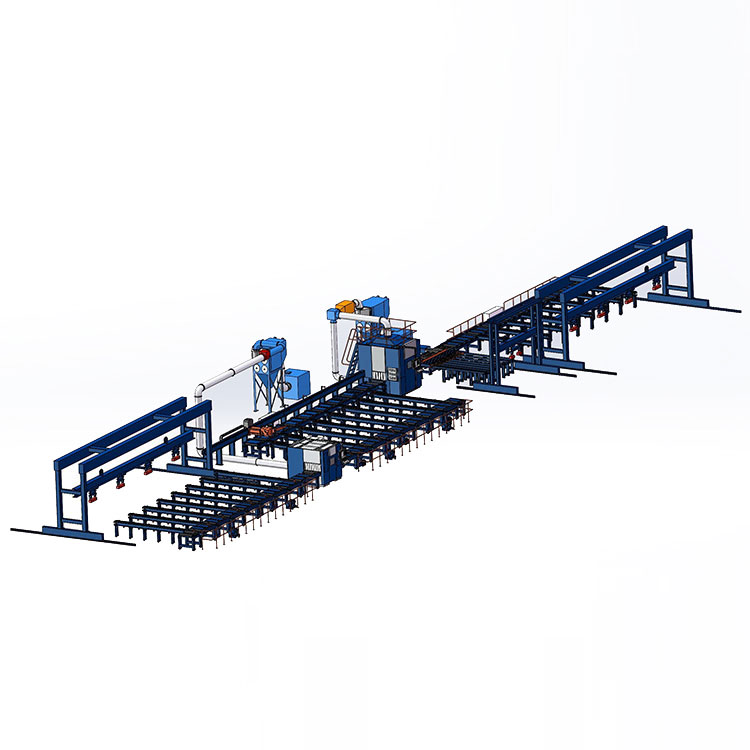
Table of Contents
- Introduction
- Key Features of Profile Robot Cutting Lines
- How the Profile Robot Cutting Line Works
- Benefits for Manufacturers
- Implementation Tips for Maximum Efficiency
- Frequently Asked Questions
Introduction
Manufacturing industries are continuously seeking solutions that combine precision, speed, and cost-effectiveness. Profile cutting is a common task in industries like aluminum fabrication, metalworking, and construction materials. Traditional cutting methods often result in inconsistent accuracy, higher labor costs, and slower production cycles. The Profile Robot Cutting Line by JINFENG® addresses these challenges by automating the cutting process, reducing human error, and boosting overall efficiency.
Key Features of Profile Robot Cutting Lines
Understanding the features of a Profile Robot Cutting Line can help businesses select the right solution for their production needs. Here are the main characteristics:
- High Precision Cutting: Uses advanced sensors and software to ensure exact dimensions and clean edges.
- Automated Loading and Unloading: Minimizes manual handling, saving time and labor costs.
- Flexible Profile Handling: Can process a wide range of profiles including aluminum, steel, and composite materials.
- Programmable Cutting Paths: Enables customized cutting patterns to meet different project requirements.
- Safety Systems: Integrated protective measures to ensure operator safety and reduce accidents.
How the Profile Robot Cutting Line Works
The operational principle of a Profile Robot Cutting Line integrates robotics, CNC technology, and intelligent software. Here is a step-by-step outline:
- Profile Loading: Materials are automatically loaded onto the cutting platform via conveyors or robotic arms.
- Positioning and Alignment: Sensors measure and adjust the profile to ensure precise placement for cutting.
- Cutting Process: The robotic arm moves along a programmed path, using laser, plasma, or saw blades to cut the profile accurately.
- Quality Inspection: Cameras and measurement systems verify the cut quality in real time.
- Unloading: The finished profiles are transferred to the next stage of production or packaging automatically.
Below is a comparison of traditional cutting vs. Profile Robot Cutting Line:
| Feature | Traditional Cutting | Profile Robot Cutting Line |
|---|---|---|
| Cutting Precision | Variable, dependent on operator skill | Consistently high, machine-controlled |
| Production Speed | Moderate to slow | High-speed automated operation |
| Labor Requirement | High | Low, minimal manual intervention |
| Material Waste | Moderate to high | Optimized, reduced waste |
Benefits for Manufacturers
Investing in a Profile Robot Cutting Line brings multiple advantages for industrial operations:
- Enhanced Productivity: Continuous automated operation allows for higher throughput.
- Cost Reduction: Lower labor costs and reduced material waste result in significant savings.
- Improved Quality: High-precision cuts reduce the need for secondary processing.
- Flexibility: Easily adapts to new profiles or design changes without major retooling.
- Operator Safety: Minimizes human contact with sharp tools or heavy profiles.
Implementation Tips for Maximum Efficiency
To get the most out of a Profile Robot Cutting Line, consider these implementation strategies:
- Proper Training: Operators should receive comprehensive training on machine programming and maintenance.
- Regular Maintenance: Schedule inspections and lubrication to ensure long-term performance.
- Integration with Production Systems: Connect the robot line with inventory and scheduling software for seamless workflow.
- Material Quality Control: Use uniform and defect-free profiles to reduce cutting errors.
- Software Updates: Keep the robot’s control software up-to-date for improved functionality and safety features.
Frequently Asked Questions
Q1: What types of materials can the Profile Robot Cutting Line handle?
A1: JINFENG®’s Profile Robot Cutting Line can cut aluminum, steel, stainless steel, and certain composite profiles with high precision.
Q2: Is programming the robot complex?
A2: The system comes with user-friendly software that allows operators to create cutting paths easily. Advanced programs can also automate repetitive tasks.
Q3: How does it improve safety compared to traditional cutting?
A3: Automated loading, cutting, and unloading reduce direct human contact with cutting tools, lowering the risk of accidents.
Q4: What is the ROI timeline for investing in this robot line?
A4: Depending on production volume, many manufacturers see a return on investment within 12-24 months due to labor savings, increased efficiency, and reduced waste.
In conclusion, the Profile Robot Cutting Line by JINFENG® is an essential solution for modern manufacturing. It combines precision, speed, and automation to streamline profile cutting operations. Businesses adopting this technology can significantly improve productivity, reduce costs, and maintain high-quality standards. To learn more about how JINFENG®’s Profile Robot Cutting Line can transform your production, contact us today for personalized consultation and product details.
Send Inquiry



X
We use cookies to offer you a better browsing experience, analyze site traffic and personalize content. By using this site, you agree to our use of cookies.
Privacy Policy